
A sunset beach portrait session can look wonderfully simple: bare feet in sugar-white sand, children chasing the warm Gulf tide, and a sky turning gold behind the people you love. The planning is often simple, too, until beach photography permits enter the picture. A permit question that goes unanswered can mean a last-minute location change, restrictions on ceremony details, or unwanted interruption during a moment you hoped would feel completely private.
For family portraits, intimate elopements, vow renewals, and small destination weddings along Fort Myers Beach, Sanibel, Captiva, and Marco Island, the right answer is rarely a blanket yes or no. It depends on the exact beach access, the size and nature of the gathering, the equipment involved, and who manages the land. A little advance clarity protects the easy, joyful experience you came to the coast for.
Why Beach Photography Permits Matter
A photography permit is not meant to take the romance out of a beach celebration. In many cases, it is how a municipality, park, preserve, or private property manager protects public access, nesting habitat, dunes, traffic flow, and the natural character of the shoreline.
The distinction that matters is usually between a quiet portrait session and an event. A photographer with a camera, a family in coordinating beachwear, and a walk along the water may be treated very differently from a ceremony with chairs, an arch, florals, amplified music, a tent, or several vendors. The first may require little beyond following beach rules. The second can trigger permits, insurance requirements, site fees, or limitations on where and when it may take place.
That is especially true on Southwest Florida’s barrier islands and public beaches, where a beautiful stretch of sand can sit beside protected dunes, sea turtle nesting areas, busy public accesses, or a resort-managed frontage. The view may look open, but the rules can change from one access point to the next.
The First Question: What Kind of Session Are You Planning?
Before asking whether permits are needed, describe your plans clearly. A standard family session is usually a small group meeting for portraits near sunset. An elopement may involve just the couple, an officiant, and a photographer. A small wedding may include guests, rentals, a processional, décor, and multiple vendors.
Details matter. Will anyone place chairs in the sand? Are you bringing an arbor, aisle runner, cooler station, lanterns, or speaker? Will there be a stylist, videographer, musician, or planner? Are you planning to reserve a particular area for guests? Even a thoughtful, low-key celebration can be classified differently once equipment or organized use enters the plan.
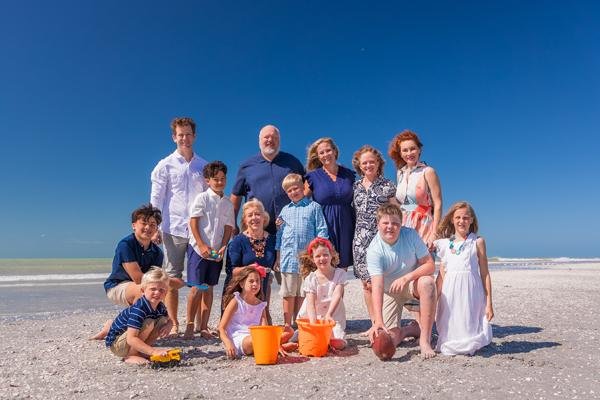
For a portrait session, it is also wise to consider the group size. A multigenerational family gathering of 20 or 30 people is still a portrait session in spirit, but it needs more space, more careful movement, and more awareness of other beachgoers than a family of four. The goal is to create beautiful photographs without blocking pathways, trampling dunes, or treating a public beach as a private venue.
Who Has Authority Over the Beach?
The phrase “the beach” covers several different kinds of property. Public city or county beaches may have their own rules for commercial photography, ceremonies, parking, and structures. State parks, wildlife refuges, and conservation areas can have separate requirements. Resorts, condominiums, and private communities may regulate photography on their own beachfront or boardwalks, even if the shoreline itself is publicly accessible.
This is why checking a general online answer is not enough. Rules can be updated, seasonal conditions can affect access, and a neighboring beach may operate under a completely different authority. Ask about the exact location, not just the island or town.
If you are staying at a resort or vacation rental, ask the property manager whether outside photography, gatherings, or wedding vendors are allowed on the property. If your ceremony will use a public beach access, confirm the local requirements for that access and the planned date. For protected coastal areas, ask specifically about beach entry routes, dune boundaries, and wildlife-related restrictions.
A seasoned local photographer can be a valuable guide here. After more than 25 years photographing Southwest Florida’s coast, Frank Simonetti Photography helps clients think through the practical details that shape a relaxed session: the character of a location, the best direction for light, beach traffic, access, and the difference between a portrait plan and an event plan. Final permit approval always belongs to the responsible authority, but local experience can prevent avoidable surprises.
Beach Photography Permits and Ceremony Details
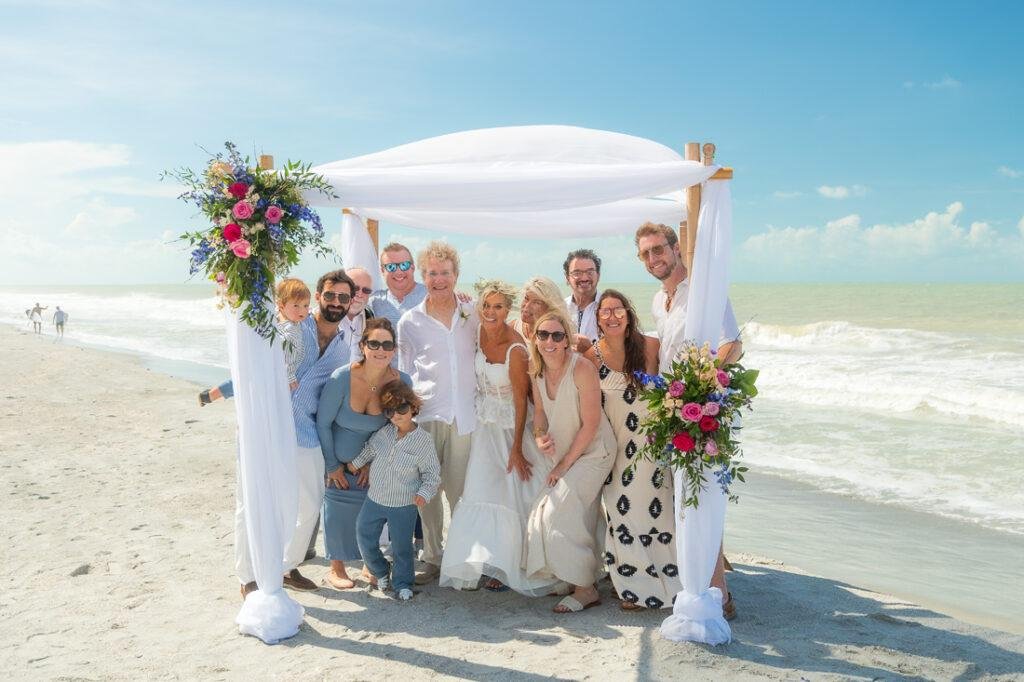
For an elopement, vow renewal, or wedding, assume that every physical item deserves a conversation before it goes on the sand. Chairs and arches are the most obvious examples, but décor can create challenges as well. Loose petals, glass, open flames, confetti, balloons, signs, and heavy rental pieces may be prohibited or impractical in coastal wind.
There is also a visual reason to keep things simple. The Gulf does not need much help. A clean shoreline, soft fabric moving in the breeze, and the people closest to you often create a more timeless image than a heavily built setup. A minimal ceremony plan can be easier to permit, gentler on the beach, and more flexible if weather or tides call for a small adjustment.
Timing deserves equal attention. The hour before sunset offers radiant natural light and a softer mood, but it is also a popular time on the shoreline. For ceremonies, allow enough time to arrive, park, walk to the site, greet guests, and begin without rushing. If a permit specifies a time window, build in a cushion rather than scheduling the ceremony to start at the exact edge of that window.
Protect the Beach That Makes the Photos Beautiful
Southwest Florida’s coastal landscape is part of the portrait. Sea oats, dunes, mangroves, and the wide sweep of sand are not simply backgrounds. They are living systems that help protect the islands and provide habitat for wildlife.
Stay on designated paths when entering and leaving the beach. Keep everyone out of dunes and away from marked nesting areas. Avoid leaving anything behind, including small décor pieces that disappear quickly in the sand. During turtle nesting season, light and activity near the shoreline may be more carefully managed, particularly after dark.
These choices also make practical sense for photography. Walking through a protected dune may look tempting from a distance, but it can lead to uneven footing, damaged vegetation, and images that do not feel respectful of the place. A skilled photographer can find elegant angles that use the dune line, water, and sunset color without crossing boundaries.
A Simple Planning Timeline
As soon as you choose your travel dates, begin narrowing your preferred beach and the type of gathering you envision. For a straightforward family portrait session, confirm the plan with your photographer and ask whether the selected location has any current considerations. For a ceremony or wedding, start permit research much earlier, particularly if you want a specific public access, a larger guest count, or rentals.
Once you understand the requirements, keep a copy of any approval, receipt, or contact information with you on the day. Let every vendor know the approved plan. A florist should know whether anything may be placed in the sand. A rental company should know delivery and removal rules. Guests should receive clear parking and arrival instructions, because a late group can quickly turn a calm sunset timeline into a hurried one.
Weather remains the one element no permit can control. Summer showers, wind, heat, and changing tides are part of a Florida beach experience. The most graceful plan has a little flexibility: a nearby backup location, a willingness to shift the ceremony time, and a photographer who knows how to use changing skies and radiant breaks in the clouds.
Questions to Ask Before You Book
When you contact the relevant beach authority, property manager, or venue, ask whether commercial photography requires approval at your exact location. Explain the estimated group size, date, time, photographer, and whether the session includes a ceremony. Then ask about fees, lead times, insurance, parking, structures, chairs, music, décor, cleanup, and weather contingencies.
Do not be discouraged if the answer includes a few rules. Clear expectations are far better than uncertainty. They let you choose a location that fits your vision instead of trying to force a wedding plan into a beach access designed for a quiet afternoon stroll.
The best beach photographs carry more than a beautiful horizon. They hold the way your children leaned into you, the laughter that arrived between poses, the hand you reached for before saying your vows. Give the permit details their proper place early, then let the evening belong to the people and the Gulf light you came to remember.